
Verruca & Plantar Warts
Do You Have a Verruca?
Know what you're dealing with — and what to do next.
The Basics
What Is a Verruca?
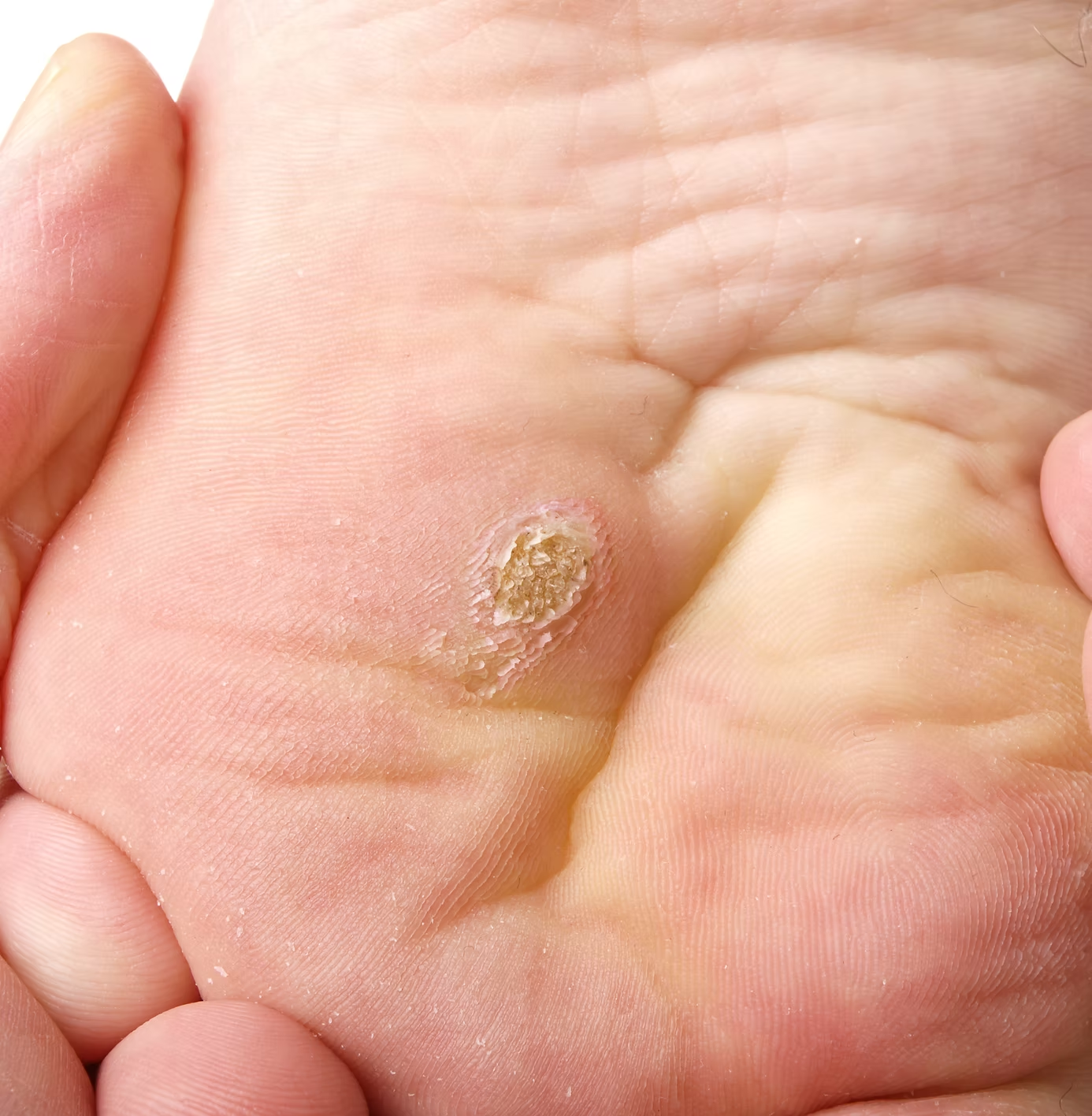
A verruca is a small, rough growth on the skin caused by the Human Papilloma Virus (HPV). When this virus enters the skin on the soles of the feet — usually through small cuts or weakened skin — it produces these characteristic lesions known as plantar warts.
HPV is spread through direct contact and thrives in warm, damp environments. That's why verrucas are commonly picked up in swimming pools, communal showers, changing rooms and gyms. Children, swimmers, athletes and anyone with a compromised immune system are particularly susceptible — but verrucas can affect anyone.
Pressure from walking pushes the verruca inwards, which is why they often feel like you have a small stone embedded in your foot.
Know Your Verruca
The three most common types we treat.
Common Verruca (Plantar Wart)
Single lesion, underside of the foot. May show small black dots (thrombosed capillaries). Often painful to walk on.
Mosaic Verruca
A cluster of verrucas spreading across a larger area, often on the ball of the foot. Harder to treat and typically more persistent.
Periungual Verruca
Around or under the toenail. Can affect nail growth and shape. Requires specialist assessment to avoid nail damage.
Red Flags
When Should You See a Podiatrist?
Book an assessment if any of the following apply:
- Your verruca has been present for more than 3 months
- It is spreading to other toes or new sites
- It is painful to walk on
- You have tried over-the-counter treatments without success
- You have diabetes, poor circulation, or a weakened immune system
- You are unsure whether the lesion is a verruca or something else
The Honest Truth
Why Won't Mine Go Away?
Verrucas are notoriously stubborn — and it's not your fault. The HPV virus has evolved to evade your immune system by hiding in the upper layers of the skin, where there is little immune surveillance. Your body simply doesn't "see" it well enough to mount an effective response.
That's why over-the-counter acid treatments rarely work for persistent verrucas. They destroy a little surface tissue but leave the virus untouched. Cryotherapy and needling can help, but results are inconsistent and recovery can be uncomfortable.
Swift Microwave Therapy is different. It uses your immune system as the treatment mechanism — making the virus visible and clearable. For most patients, that's the difference between years of frustration and a full clearance, typically in 3–4 sessions (though this varies from patient to patient).